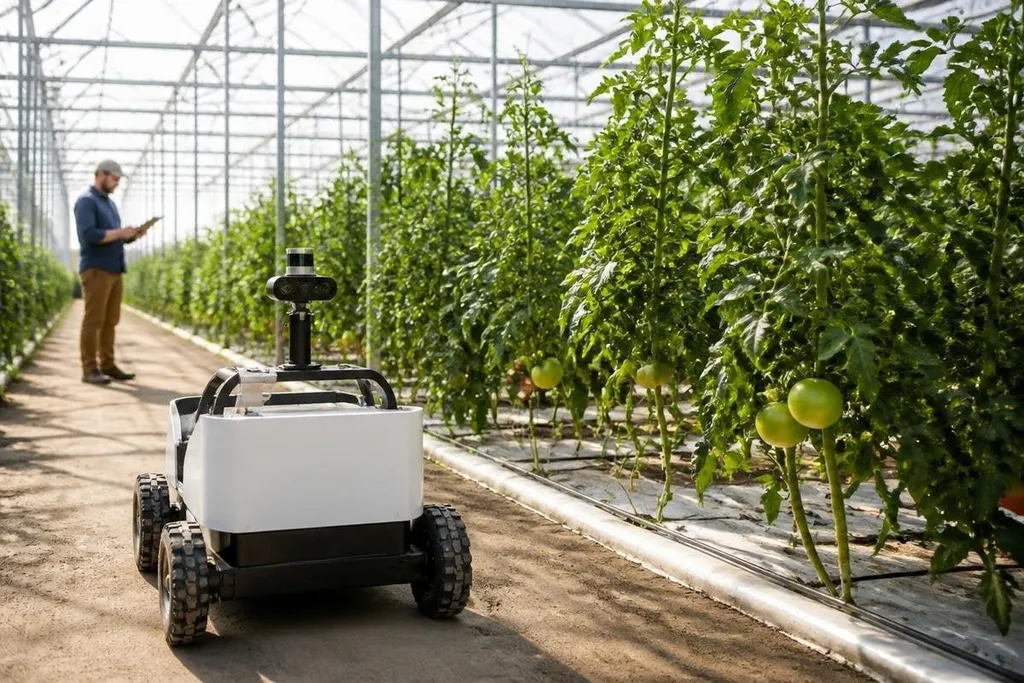
A greenhouse robot can already move through crop rows, carry tools, or collect images. AI changes the job by helping the robot decide what it sees, where it should go, and which plant needs attention first.
For a grower, the useful question is practical: does the system reduce missed plants, wasted trips, or manual checking without slowing the work?
Quick read
- Cameras and depth sensors help robots locate plants, fruit, leaves, and obstacles.
- Machine learning can sort images, but each crop and greenhouse needs careful training and checks.
- The best near-term systems will support workers with records and targeted tasks rather than replace every hand operation.
How AI helps a greenhouse robot see
A fixed route works when every plant looks the same and every row stays clear. Greenhouses rarely stay that tidy. Leaves spread into paths, fruit appears at different heights, and sunlight changes across the day.
A robot can combine camera images with depth data to estimate where a plant begins and where an arm can safely reach. Machine learning then helps classify what appears in the image, such as a flower, ripe fruit, damaged leaf, or empty growing space.
That classification matters because the robot needs a task, not an image. A system looking for ripe tomatoes might mark fruit for picking. A system checking plant health might send a worker to inspect a row instead of treating every plant as a problem.
The result still depends on the training data. A model built with clear images may struggle with shade, glare, overlapping leaves, or a crop variety it has not seen. Greenhouse operators need a way to review uncertain results and correct errors.
Movement and task planning
AI also changes how a mobile robot plans its route. The robot can use sensors to map the growing area, locate people and equipment, and adjust its path when a row is blocked.
A robotic arm can use plant location data to choose a position before it reaches toward fruit or leaves. Those decisions reduce wasted movement, but they do not remove the need for safety checks.
People may enter a row without warning, carts may be left in the path, and a plant can move after contact with a tool. The robot needs clear stop controls and a safe response when its view is uncertain.
For a greenhouse manager, the useful record may matter as much as the movement itself. Each pass can attach an image, plant location, task result, and time to a crop map. That gives staff a way to check whether a problem is spreading or whether a treatment changed the plant.
A crop map earns its place when staff use it to change the next task. Greenhouse robotics reporting from Robot24.com can connect those records to the robot’s task, test date, and human checks, so a manager can see where AI supports daily work and where people still take over.
Where the limits remain
Picking is a hard test because fruit can hide behind leaves, stems can vary in strength, and the gripper must avoid damage. A robot may identify the right fruit but still miss the stem, press too hard, or spend too long on one plant.
Plant care also creates uneven tasks. Some jobs need a gentle touch, while others need force, liquid, or a tool change. AI can select a task from sensor data, but the hardware still has to reach the plant and carry it out safely.
Data quality creates another limit. A greenhouse team needs labeled images, clean sensor readings, and regular checks as crops grow. If the system records poor locations or repeats a wrong classification, later decisions may become less useful.
I’d treat any claim of full greenhouse autonomy as unproven until the robot works through changing crops, blocked paths, and mixed lighting over a full production cycle.
A buying checklist for growers
Before a trial, check these points:
- Target task: Pick one job, such as crop inspection, transport, or fruit counting.
- Crop fit: Test the system on the exact plant type, growth stage, and row layout.
- Sensor coverage: Check performance under shade, glare, wet leaves, and dense growth.
- Worker control: Confirm that people can stop the robot and review uncertain results.
- Useful records: Ask how images, locations, and task results leave the robot.
- Trial measure: Set a clear result, such as fewer manual checks or less empty travel.
A sensible trial starts with inspection or transport, where a mistake is easier to catch than a damaged fruit. The next step is a measured test across changing crop conditions, with the grower checking both task results and time spent per row.